
Butterfly
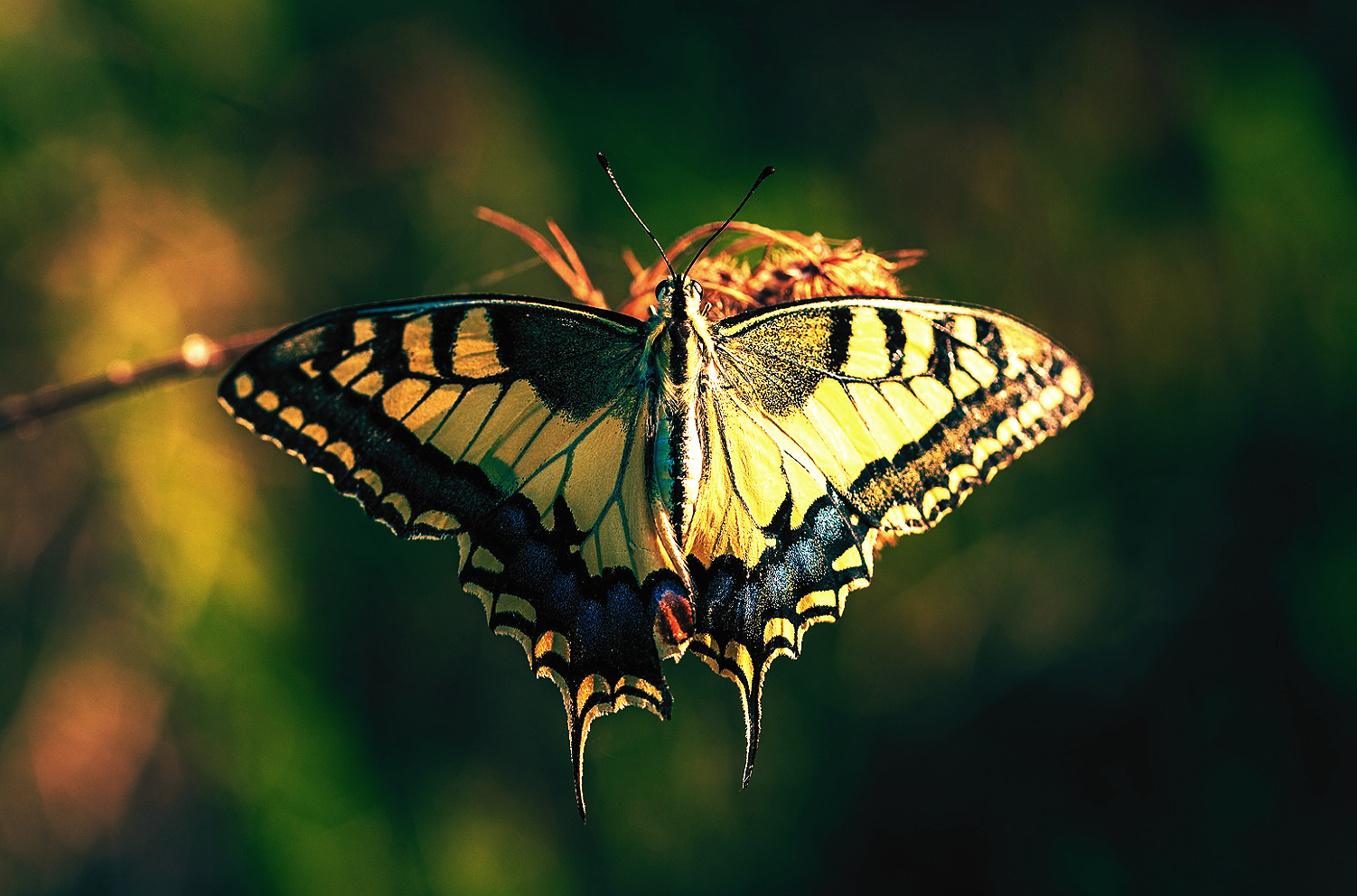
BUTTERFLY
Written by Jorien van Duijn
She is not the beginning of the story. She is the moment the story becomes visible.
MY PERSONAL STORY
For someone who is so connected to the animal realm, and holds close relationships with so many creatures, who has worked with animal guides and has always felt intimate connection to our animal friends, I actually never felt particularly close to butterfly.
In so many spiritual fields, butterfly is everywhere. A popular symbol of transformation. A messenger of change. A poster image for becoming. I understood her conceptually. I respected her. But she did not speak to me, and I have always refused to spiritualise and just create a message I wasn’t given personally.
What shifted everything was Anna.
Anna was my third pregnancy. She grew inside me physically for seven weeks. I named her, knew her, felt her — and then she was gone.
After that loss, swallowtail butterflies began to appear. In Dutch we call them koninginnepage (Queen page) large, pale, dancing on the air with that unmistakable unhurried grace. I would see her in the garden, on a walk, in a moment when something in me went quiet and open.
I knew it was Anna.
Not as metaphor. Not as comfort. As actual presence.
This is when butterfly stopped being a spiritual concept for me and became a living medicine. And I dove deeper into transformation, not as a popular idea, but transformation as a biological truth, an energetic reality, a threshold that costs something real and delivers something that could not have come any other way.
Years after moth opened the shamanic field for me (read that story in the Moth article), butterfly arrived carrying her message. Not the easy version of transformation. The arrived version.
THE BUTTERFLY
Butterfly belongs to the order Lepidoptera — from the Greek lepis, scale, and pteron, wing. Scaled wings. There are roughly 17,500 known species of butterfly. They are found on every continent except Antarctica.
What most people do not know is that butterfly evolved from moth. Moth is the elder: ancient, 300 million years old, predominantly nocturnal. Butterfly is what emerged when that lineage learned to work in full daylight. Butterfly is not moth's opposite, nor is she her sister.
She is moth's descendant. The rare, visible, daytime expression of a predominantly night intelligence.
Butterfly navigates by the sun. Her antennae end in small clubs. Precise, sensing, tuned to the light. She rests with her wings folded upright, the full colour visible. She does not hide what she has become.
THE IMAGINAL CELLS:
THE BIOLOGY OF CROSSING THE THRESHOLD
The most stunning and profound wisdom of butterfly medicine is a layer deeper than where most are willing to go. It was revealed to me in a call within Field of Ember, in a small group mentorship programme I facilitated. The mystery and intelligene of imaginery cells.
When the catterpillar is ready, and forms the chrysalis, inside the chrysalis, the caterpillar dissolves. Not metaphorically. Biologically. Digestive enzymes break its muscles, organs, and tissue down into liquid — approximately 95% soup. Everything it was, consumed.
What survives are clusters of cells called imaginal cells. They were present in the caterpillar from the moment it hatched — dormant, protected, carrying a blueprint the caterpillar never expressed and never knew it held.
The caterpillar's own immune system attacks them. It does not recognise them. They are marked as foreign — as threat — and the immune cells move to destroy them. Early on, this works. Isolated imaginal cells are killed.
But imaginal cells communicate. They send electrical signals through the soup. They begin to oscillate at the same frequency — to find each other not by sight but by resonance. They cluster. And once enough of them have found each other, once they reach a threshold of coherence, the immune system can no longer overwhelm them.
Not because the immune system weakens. But because the imaginal cells have become a field — and the immune system has no mechanism to attack a field.
Then the butterfly assembles. From the dissolved raw material of everything the caterpillar was, the new form builds itself.
There is a tipping point: a moment when the transformation becomes irreversible. Scientists can observe it. Before it: soup with intact cell clusters, dissolution still dominant. After it: the butterfly architecture is already running, already self-organising, already inevitable. The blueprint has activated the raw material.
The imaginal cells do not know when they have reached this point. There is no signal. No announcement. They simply keep doing what they do — being what they are, finding each other, holding their frequency — and at some threshold the old system collapses and the new form becomes inevitable.
The tipping point is only visible in retrospect.
And when the butterfly finally emerges — pale, soft, shell not yet hardened, colour not yet fully in — she carries something extraordinary. Some of her neurons hold memories from the caterpillar's life. The transformation did not erase. It threaded through. What the caterpillar knew is still present, integrated into a completely new form.
This is the imaginal cell as threshold intelligence. Not the blueprint held in darkness — that is moth's teaching. This is the blueprint crossing into form. The moment of irreversible arrival. The colour hardening in light. This is true transformation, going all in, dissolving, but remembering.
The neccesity of clustered intelligence and cells that hold onto their role and their wisdom.
No matter what.
HER NAMES ACROSS THE WORLD
In ancient Greek, the word for butterfly is psyche, the same word as soul. The Greeks did not separate them. Butterfly was the soul made visible, given wings, freed from the body that had carried it. In mythology, Psyche was a mortal woman who became a goddess — her name and her symbol inseparable. She is the soul in its fully arrived, fully winged form.
In China, butterfly represents immortality, joy, and love in its freest form. The philosopher Zhuangzi dreamed he was a butterfly — and upon waking could not determine whether he was a man who had dreamed of being a butterfly, or a butterfly now dreaming of being a man. This is not a riddle. It is a teaching about identity and transformation. About what remains when form dissolves and reforms.
In Celtic tradition she lives at the threshold between lives — the liminal being, the one who crosses between forms. She is not the symbol of change. She is change itself, made visible.
In Aztec tradition, butterfly was the soul of a fallen warrior or a woman who died in childbirth — the most sovereign deaths, the ones that required the most courage. They returned as butterflies and hummingbirds, visiting the flowers of the earth. Transformation after the ultimate threshold. Sovereignty in its most luminous form.
In many Indigenous traditions across the Americas, butterfly carries prayers. You whisper your intention to her and release her and she carries it to where you cannot go. Her flight is prayer made visible. Intention given wings.
Every culture that has watched her arrive from the chrysalis has understood the same thing: she is what becomes possible after dissolution. She is proof that the blueprint survives the soup.
WORKING WITH BUTTERFLY
Work with Butterfly when you are in the soup — when what you were is dissolving and what you are becoming is not yet visible. When the immune system of your environment is attacking what is new in you, marking it as foreign, as threat. When people who knew the caterpillar cannot yet see the butterfly.
Work with her when you are looking for others carrying the same frequency. The imaginal cells did not survive alone. They survived through coherence — through finding each other in the soup and oscillating together until the signal was stronger than any single cell's vulnerability. This is what councils are. This is what this field is.
Work with her when you sense the tipping point — when something in you knows, without being able to prove it, that the transformation has become irreversible. That the old system is still fighting but has already lost. That the architecture of what is coming is already assembling itself from the dissolved material of what was.
Work with her when you are newly emerged — pale, soft, not yet fully coloured. When the shell is still hardening and you are vulnerable in a way you will not always be. This is not weakness. This is the moment just before the full arrival.
And work with her when it is time to be seen. When the wings are ready. When the colour has come in. When the work that happened in darkness is ready to move in full light.
She does not emerge gradually. She arrives.
The blueprint was always there.
The transformation was never the end of the story.